This is the Space & the Arts archive | Back to Main
tobearchived after 6 years
Posted on Monday, September 17, 2012
After exactly 6 years (first post) its time to archive this blog. I've had a great time keeping a trail of my online journeys over these past 6 years and it served me well in my worldly travels, but its time for a new itinerary. I will keep the content up for the Google but I won't be posting here anymore. If you're interested in staying connected, follow me on Twitter @tobedetermined until I find a new home to share my current and future travels.
Space Definitely Was A Place Once
Posted on Friday, February 6, 2009
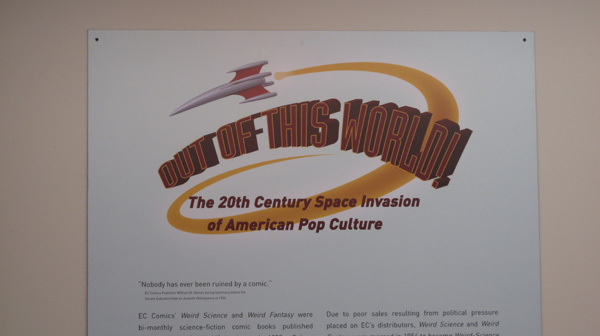
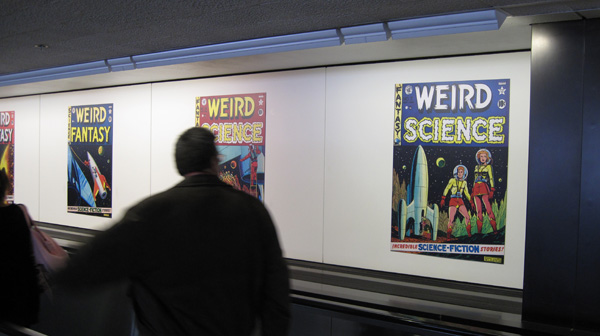
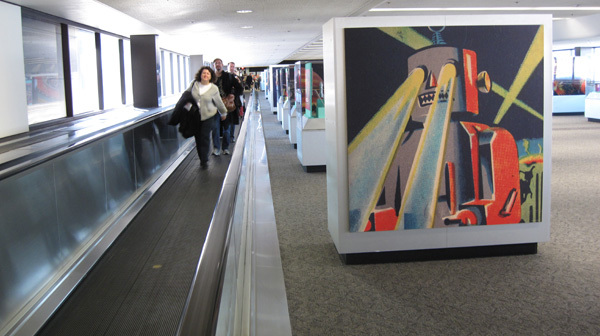
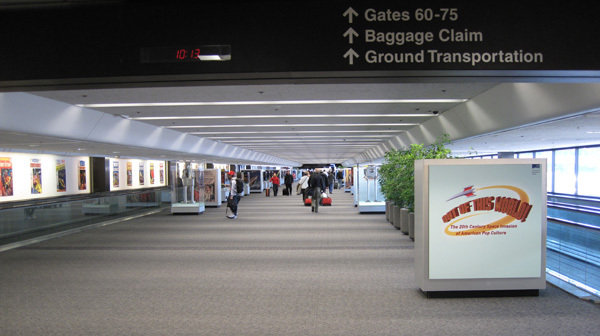
On my way to Amsterdam I ran into the excellent exhibition "Out Of This World" at the San Francisco Airport (SFO):
Few people today can recall how fantastic the dreams of outer space were prior to its exploration. The knowledge gained from repeated trips into space has largely eclipsed the wild conjecture about the strange planets existing beyond our atmosphere, the beings we would encounter, and the spacecraft that would take us there. But before space was explored, it had to be imagined. The inspired ideas of space exploration and future technologies are vividly reflected in the related toys and household products that permeated American popular culture in the early to mid-twentieth century.
The accompanying brochure is available here. Some more personal impressions @ flickr.
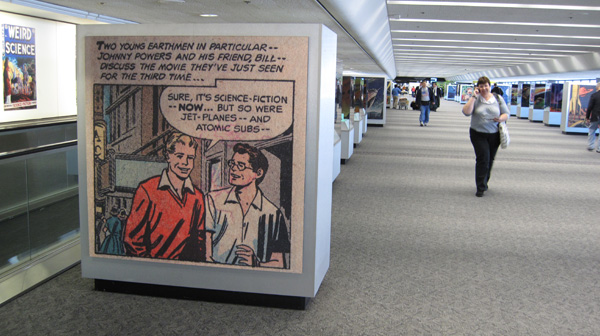
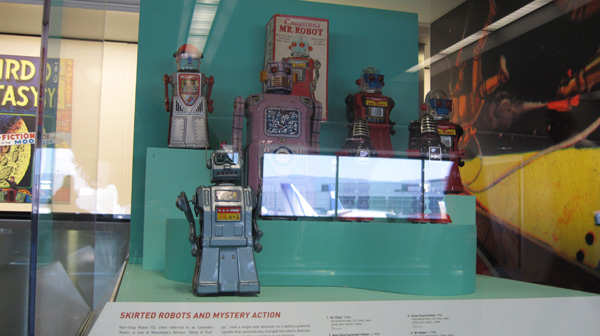
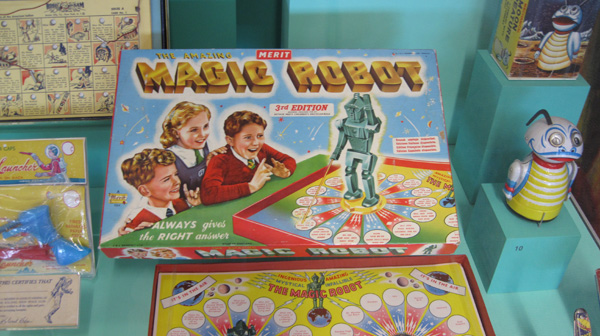
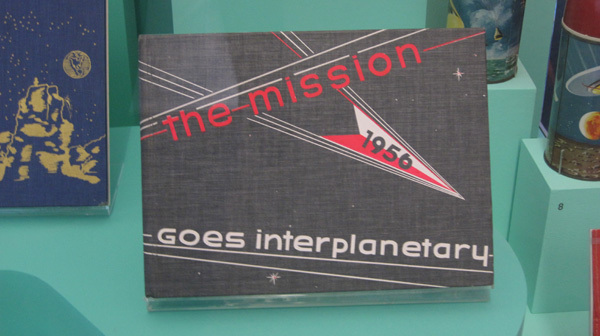
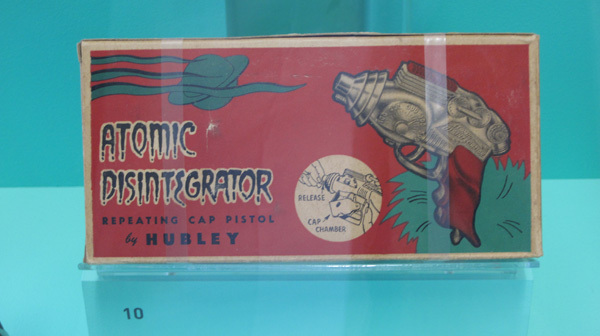
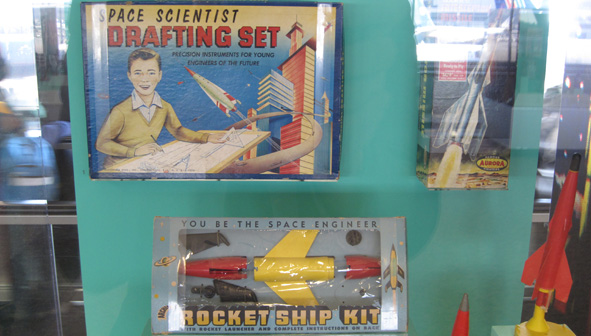
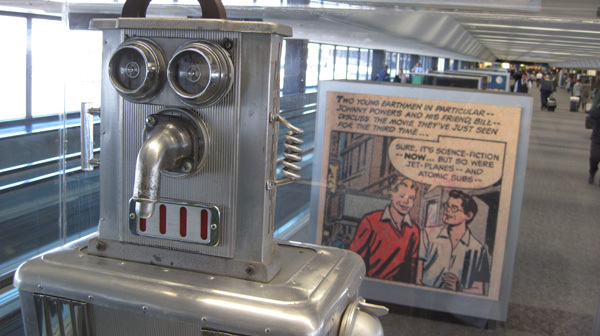
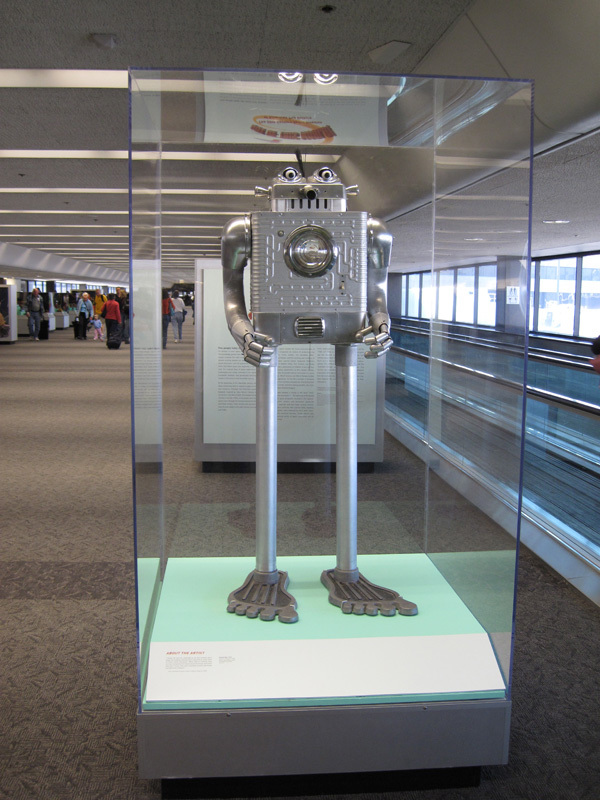
Sign Of The Times
Posted on Monday, December 1, 2008
Chang'e 1 Lunar Map Released. What a great image! Especially with those Chinese characters above it (the 5th character from the left is the character for the moon according to my American colleague who was born in China). They have even gone through great length to appropriate all large craters with Chinese characters. Click on the image for a high res version (via).
International Committee on the 'Cultural Utilisation of Space' Launched
Posted on Friday, October 17, 2008
Reblogging Arts Catalyst:
The new IAF (International Astronautical Federation) Technical Activities Committee for the Cultural Utilisation of Space (ITACCUS) was announced during the Less Remote symposium. ITACCUS has been set up to promote and facilitate the innovative utilisation of space by the cultural sectors of society internationally. The term 'utilisation' is used often by the space community. In a cultural context, it may include cultural production, cultural preservation, cultural representation, cultural education and cultural development.The launch speakers were ITACCUS co-chairs Roger Malina, Director, L'Observatoire Astronomique Marseille, and Nicola Triscott, Director of The Arts Catalyst, and committee members Ciro Arevelo, Chairman of the United Nations Commitee on the Peaceful Uses of Outer Space, who welcomed the ITACCUS initiative for the contribution that the cultural sector could make to space and society's engagement with it, Mario Hernandez from UNESCO, who explained the work of UNESCO in using space surveillance systems to monitor world heritage sites, Bernard Foing from the European Space Agency and Spanish astronaut Pedro Duque.
ITACCUS will report on its activities online, and will submit a report annually on cultural utilisation of space to the UN Committee on the Peaceful Uses of Outer Space. It is developing a webspace, which will be linked from its page on the IAF website at www.iafastro.com.
Fly Me To The Moon
Posted on Sunday, October 12, 2008
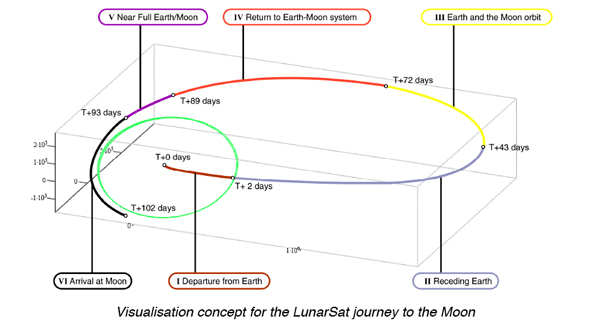
Just finished reading a great book written by Edward Belbruno on his design of advanced trajectories called "Weak Stability Boundary Trajectories". Trajectories that helped save several spacecraft stuck in Low Earth Orbit, like the Japanese Hiten spacecraft. He gives a beautiful description of how a theoretical mathematician enters the space industry (at JPL) and comes up with a highly innovative way to think about trajectory design and gravitational fields. Basically, it comes down to using the gravitational fields of the Earth and Moon to have a "ballistic capture" into Lunar orbit. One of the metaphors he uses is the wave surfer. Be too slow, and the wave passes you by. Be too fast, and the wave won't catch up with you. In Belbruno's case, he is talking about gravitational attraction (not exactly waves [at least, not it his case], but the metaphor still works to explain the idea). Brings back memories of 10 years ago when I was working as part of my thesis on a mission that was planned to take one of these fuel-efficient trajectories to the Moon (image above was my script to use onboard cameras to film the Earth during the 90-day Lunar transfer based on trajectory design by Robin Biesbroek, the green circle is the moon's orbit around the Earth). Beautiful to read how innovation in space exploration happens. And he even manages to bring Vincent van Gogh's Starry Night into his conceptual framework (podcast with Belbruno at The Edge).
Artists get involved in defining the Aims and Missions of a Space Agency
Posted on Wednesday, October 1, 2008
The IAC is on this week. Too bad I am missing it. Would they possibly think of recording the sessions and putting them online like Techcrunch did with their Techcrunch50?. There's good stuff happening, like the side conference Less Remote, which includes discussions on Cultural Utilisation of Space as blogged by Nicola Triscott at the Arts Catalyst blog:
Yesterday evening, we had some excellent examples presented of 'cultural utilisation' of space, notably Marko Peljhan reported on the development of the Slovenian Space Agency, with artists contributing directly to the formulation of its aims and missions.This morning, we have had cracking presentations from Andrew Stones, Iain Bolton, Frank Pietronigro and Hans-Arthur Marsiske. Artist Andrew Stones challenged any notion of ‘objectivity’ in deciding space priorities and reflected on how space is influenced by the cultural imaginary and by dominant and privileged interests. Iain Bolton examined the influence of political culture in the area of national space policy, particularly in the US which differs from the space policies of other nations because of its explicit goal of remaining ‘the leader’ in space exploration. Frank Pietronigro joined us by video link from San Francisco to propose the potential contribution of queer culture to the evolution of future space exploration. Hans-Arthur Marsiske reflected on the darker aspects of the legacy of Christopher Columbus (after whom the new ESA ISS laboratory is named) and what this might imply for future encounters with alien cultures.
10 Bucks Well Spend
Posted on Wednesday, September 24, 2008
Following on from yesterday's syndication of Tim O'Reilly's keynote at the NY Web2.0, I just finished watching the documentary he has been pointing out on several of his keynotes: A Crude Awakening: The Oil Crash. Buy it on itunes from their website and have a peak into the future of post cheap oil society. Quite informative...
Tim O'Reilly's Call to Action
Posted on Tuesday, September 23, 2008
And it ain't throwing sheeps. From last week's Web 2.0 Expo in New York entitled "Web Meets World".
(via)
tobedetermined.org Extended Credo
Posted on Monday, September 1, 2008
Update: A post over at O'Reilly Radar by Nat Torkington reminds me of another quote I've used in the earlier days of this blog. It's a (famous) quote from William Gibson: The future is here, its just not evenly distributed yet. In his post, Nat refers to another quote from Gibson that brings the overarching point home:
One of the things our grandchildren will find quaintest about us is that we distinguish the digital from the real, the virtual from the real. In the future, that will become literally impossible. The distinction between cyberspace and that which isn't cyberspace is going to be unimaginable. When I wrote Neuromancer in 1984, cyberspace already existed for some people, but they didn't spend all their time there. So cyberspace was there, and we were here. Now cyberspace is here for a lot of us, and there has become any state of relative nonconnectivity. There is where they don't have Wi-Fi.
Having a 3-day weekend does have its benefits (like in: having an extra evening behind your computer?). Think I just stumbled upon something like an extended credo for this blog (beyond tobedetermined.org: A blog about outer space, cyberspace, their common future and all that is leading up to it... ). I started gathering some quotes that resonated with me over the years and ended up with this list (read from top to bottom, in that order):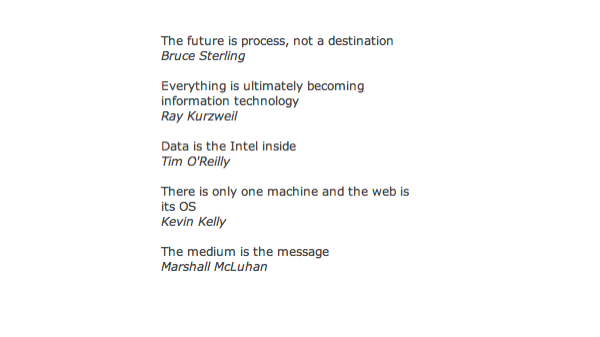
I am sure there are more out there that would fit this list, so if you have any suggestions pls let me know.
Summer 2008
Posted on Friday, August 1, 2008
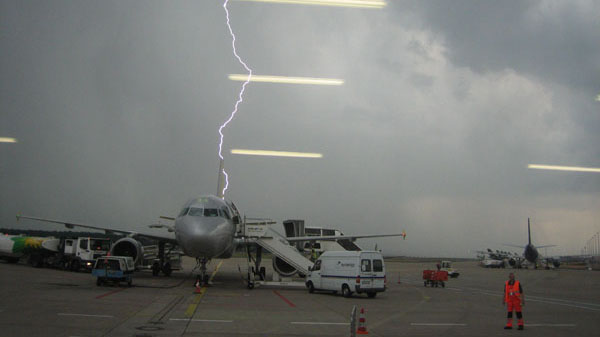
Back from a week of Internetless holiday on the island of Korcula (above photo was at Koln airport just before we were told we could board the plane ;-). Catching up here are a few relevant tidbits:
- The Economist's commentary on NASA's 50th anniversary provides a sharp dissection of NASA's past, present and future. Its the most sensible story on space and NASA I've read in a long while. As always, the comments are worth reading too, if only to see how space proponents bring their arguments into gear to downplay the article's 'hammer on the nail' analysis
- Sanfran article of the week about twitter, relationships, and the bay area working spirit
- Missed OSCON, but here's a 37min intro and Tim Oreilly's comments
- A great discovery: this TED video by kevin kelly. I especially like his McLuhan Reversal analogy. Have to watch it again.
Twittering from LSI conference
Posted on Monday, July 21, 2008
Just got into the LSI Moon conference here at Ames. Follow my twitter on it here. Alternatively you can see what Keith Cowing is up to here. Or check out the program here. More as it comes in...
The Stone Age Didn't End Because of a Shortage of Stones
Posted on Sunday, July 20, 2008
Bruce Sterling comments inline on this passionate call by Al Gore for the US to become carbon fuel independent in 10 years.
Time to put some solar panels on my roof here in Palo Alto. Or wait, wasn't I first gonna spend 2 weeks flying around Europe for my holiday, buy the iPhone and upgrade my car (from what I hear SUV's come cheap these days).
Could this be the "Moonrace" of the 21st century?
We need you. And we need you now. We're committed to changing not just light bulbs, but laws. And laws will only change with leadership. On July 16, 1969, the United States of America was finally ready to meet President Kennedy's challenge of landing Americans on the moon. I will never forget standing beside my father a few miles from the launch site, waiting for the giant Saturn 5 rocket to lift Apollo 11 into the sky. I was a young man, 21 years old, who had graduated from college a month before and was enlisting in the United States Army three weeks later.I will never forget the inspiration of those minutes. The power and the vibration of the giant rocket's engines shook my entire body. As I watched the rocket rise, slowly at first and then with great speed, the sound was deafening. We craned our necks to follow its path until we were looking straight up into the air. And then four days later, I watched along with hundreds of millions of others around the world as Neil Armstrong took one small step to the surface of the moon and changed the history of the human race.
We must now lift our nation to reach another goal that will change history. Our entire civilization depends upon us now embarking on a new journey of exploration and discovery. Our success depends on our willingness as a people to undertake this journey and to complete it within 10 years. Once again, we have an opportunity to take a giant leap for humankind.
Yup
Posted on Thursday, July 17, 2008
Wading through +2k unread posts in my list of RSS feeds (Bruce Sterling's Beyond the Beyond).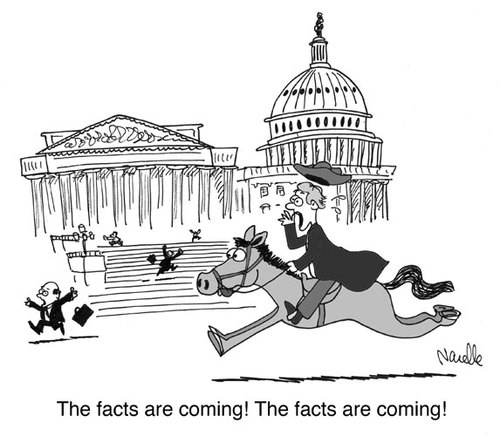
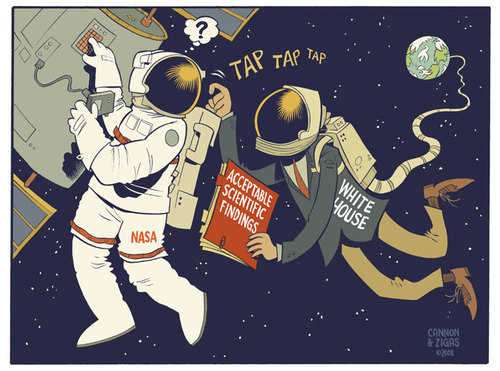
Its You They're After
Posted on Saturday, July 12, 2008
The best analysis on Google's Lively I've read sofar comes from RealityPrime: Its not so much about giving people a nice virtual world to play with, its providing a new interface to harvest new and previously untapped user behaviour. Which reminds me of an excellent article I was send the other day on the near future of advertising, a must-read.

Yes, But Is It Art?
Posted on Saturday, July 12, 2008
Or Space Aaaarrrrttt, as a Dutch Space Agency collegue would call it back in the days... (personally I wouldn't directly associate this with art, but that's another story. Its an excellent video though!)
Super Sprayer - video powered by Metacafe
Robots Get Better Every Day
Posted on Wednesday, July 9, 2008
A couple of quotes from an article in the Washington Post entitled 'U.S. Finds It's Getting Crowded Out There' (via):
The cost of manned space exploration, which requires expensive measures to sustain and protect astronauts in the cold emptiness of space, is a particular target."The manned space program served a purpose during the Apollo times, but it just doesn't anymore," says Robert Parks, a University of Maryland physics professor who writes about NASA and space. The reason: "Human beings haven't changed much in 160,000 years," he said, "but robots get better by the day."
Another one:
In its assessment, Futron listed the most significant U.S. space weakness as "limited public interest in space activity."
Hmm, it looks like us humans are a real show stopper when it comes to pushing the borders of reality further into outer space. Perhaps we should consider targeting robots instead of humans with the US civil space PR machine. Once they are on equal par with us, they'll probably be much more enthused and equipped to go into outer space. And after all, our race already had its 15 minutes of fame wouldn't u say? An add campaign targeted at robots...hmm...: "Space, The Final Webservice"
Committee For The Cultural Use of Space
Posted on Monday, June 16, 2008
Well, seems our efforts over the years are paying off in an interesting way. Nicola Triscott recently presented at UNCOPUOS and announced the setup of a new Committee at the International Astronautical Federation: the IAF Technical Activities Committee for the Cultural Utilization of Space (ITACCUS):
The IAF Technical Activities Committee for the Cultural Utilization of Space (ITACCUS) seeks to:
Promote and Facilitate the innovative utilization of space and ground segments of space projects and systems, and space applications systems by Professionals and Organizations in the Cultural Sectors of Society Internationally
Browsing a New World
Posted on Monday, May 26, 2008
Just before logging off, I am reminded of the resemblance I noticed before between the mission logo of Phoenix and the Firefox logo. Guess it makes sense if you consider the Phoenix lander a physical counterpart to the world's (2nd) most popular web browser. Wonder whether we'll ever get the physical equivalent of greasemonkey scripts on our planetary explorers. Btw, looking for the high-res version of the Phoenix logo, I ran into below image of a mural that was painted on the outer wall of the Phoenix Sci Ops center at the Uni of Arizona. Sweet! (more info here)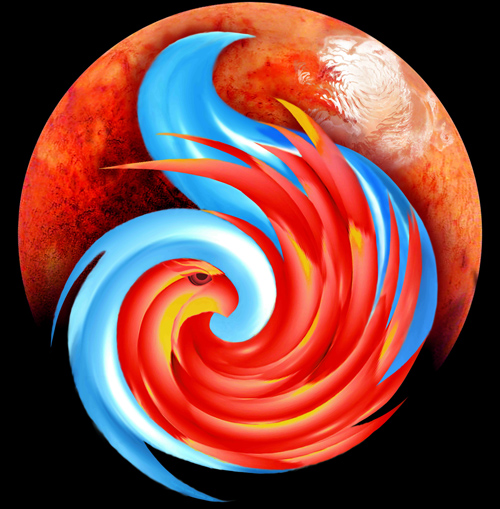


World Wide Telescope Released
Posted on Thursday, May 15, 2008
Yep, its here (given the page design you'd mistake it for a Mac site just for a second). Ever since I upgraded to Mac OSX 10.5 (aka Leopard) last week my Parallels XP virtual machine is in a permanent state of reboot so I haven't had a personal interaction with WWT yet, but from the reviews of it over at OgleEarth and The Earth Is Square, it seems to be a pretty nifty application.
Can't wait to get my NASA Macbook Pro exchanged for a proper PC...
Some views to enjoy (until I get back to posting regularly)
Posted on Tuesday, May 6, 2008
Its busy times here at Ames...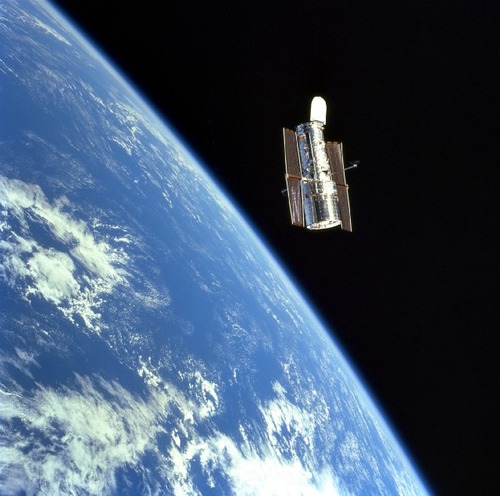
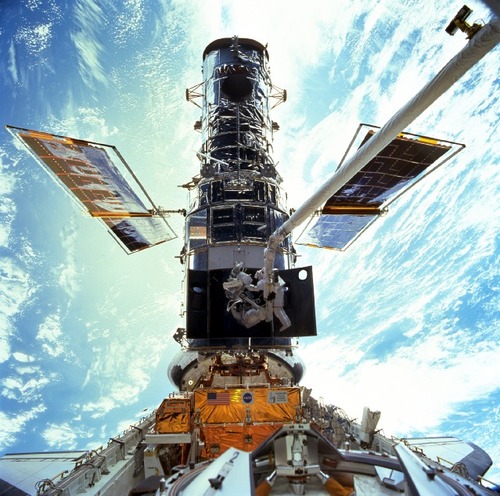
Yuri's Night 2008 Revisited
Posted on Tuesday, April 15, 2008
Ah, we shouldn't forget to mention NASA Ames director Pete "The General" Worden himself of course, the one who is making this outburst of creativity possible here at Ames...(photo via cnet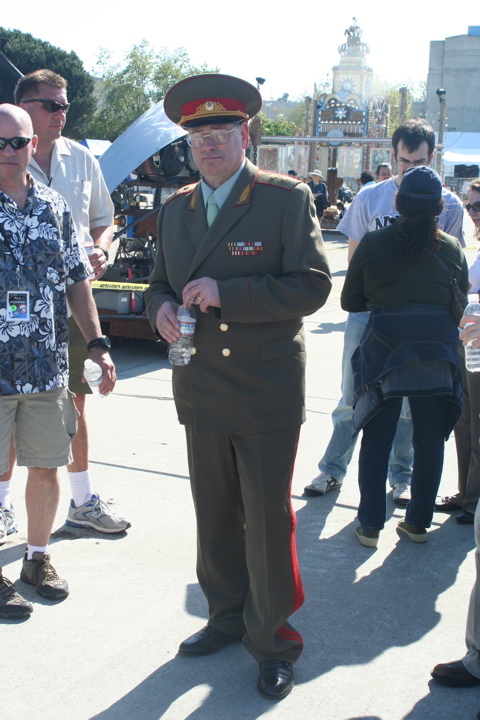
Yuri's Night 2008
Posted on Tuesday, April 15, 2008
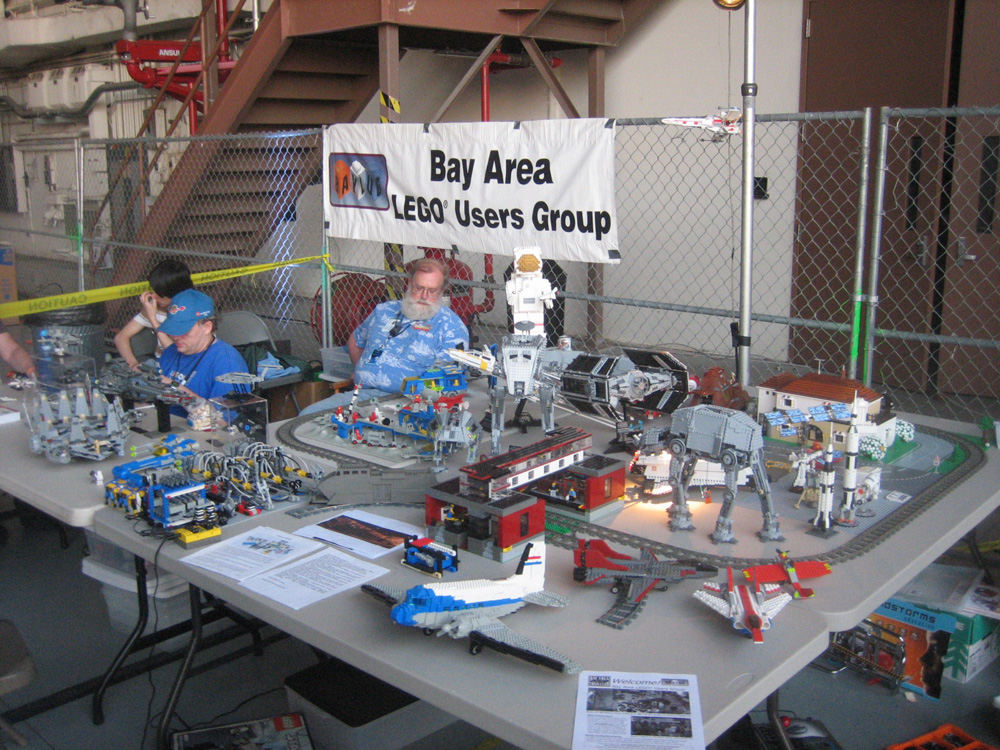
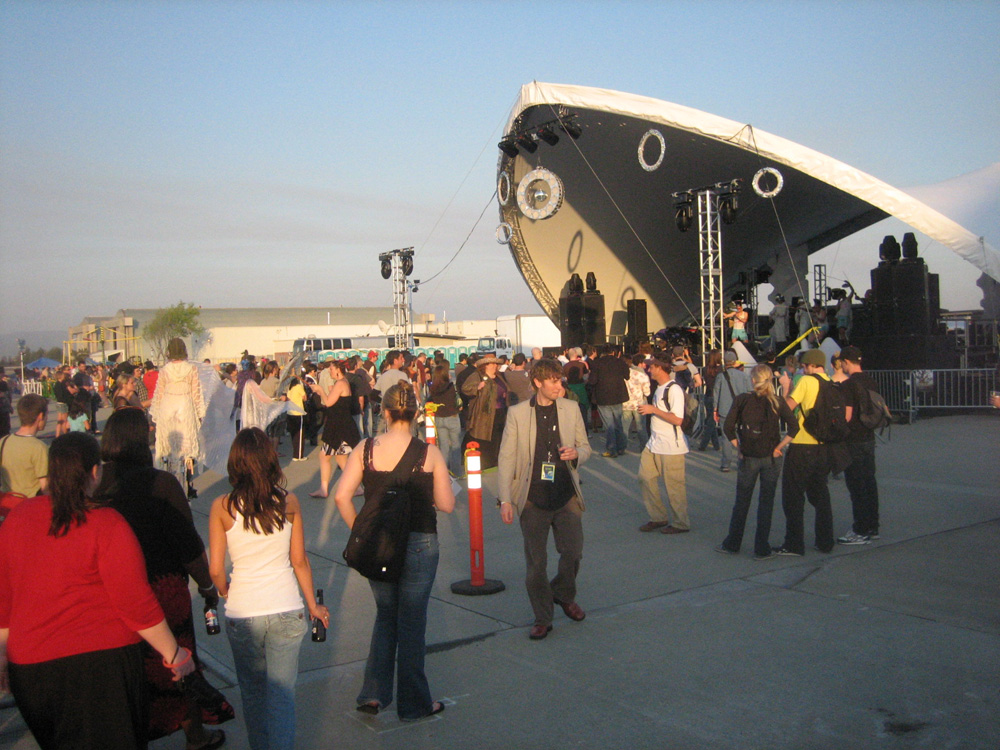
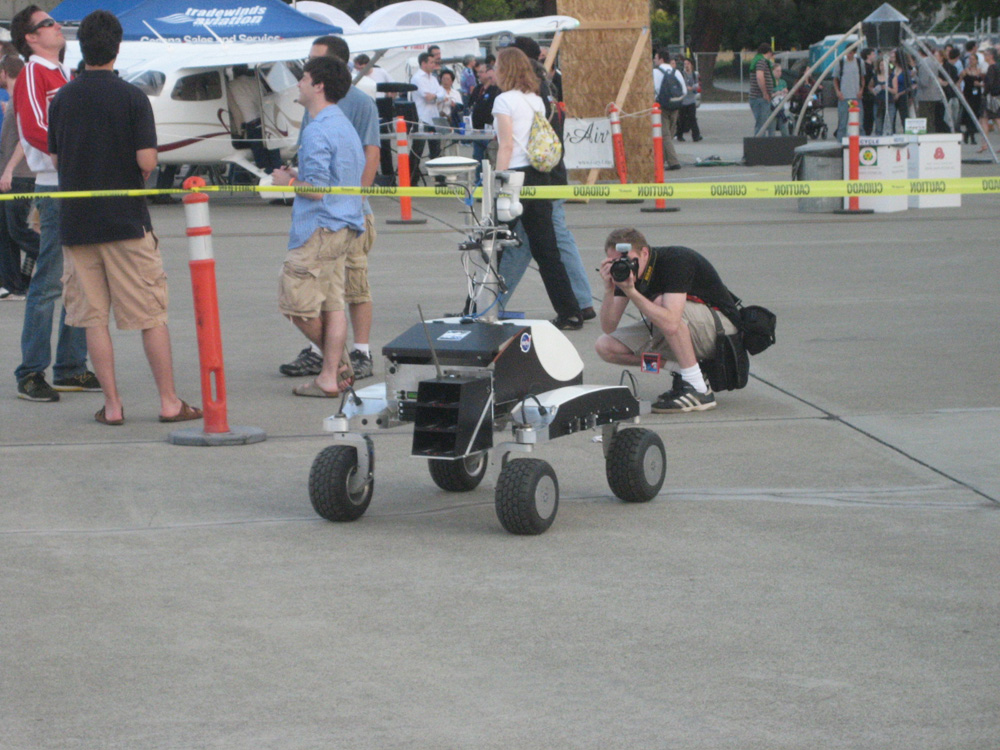
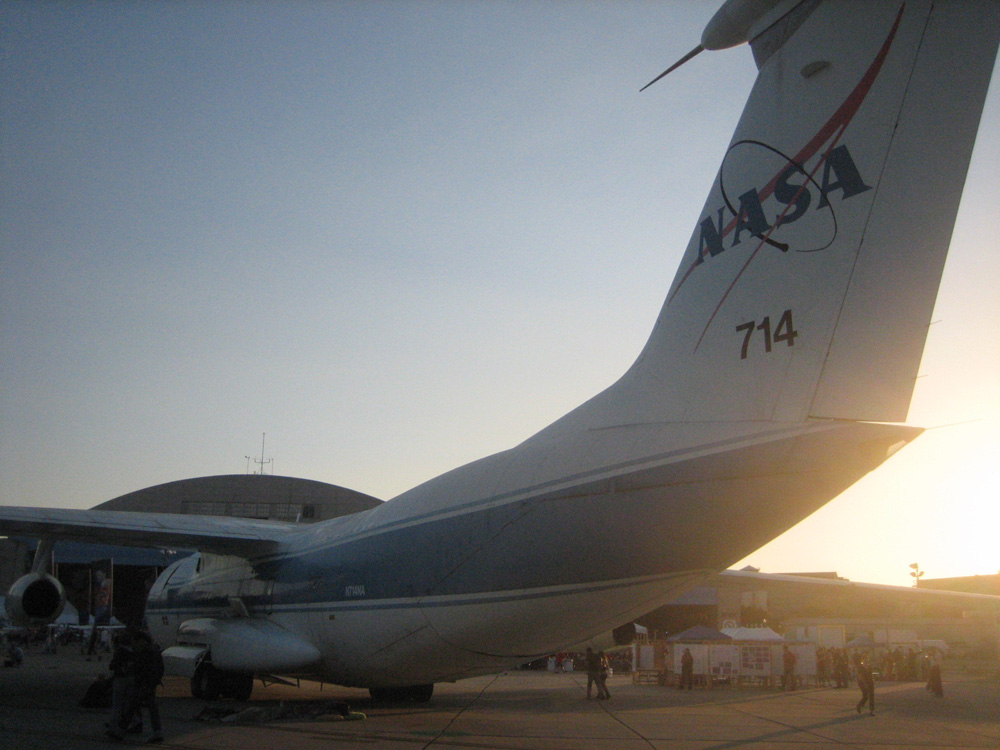
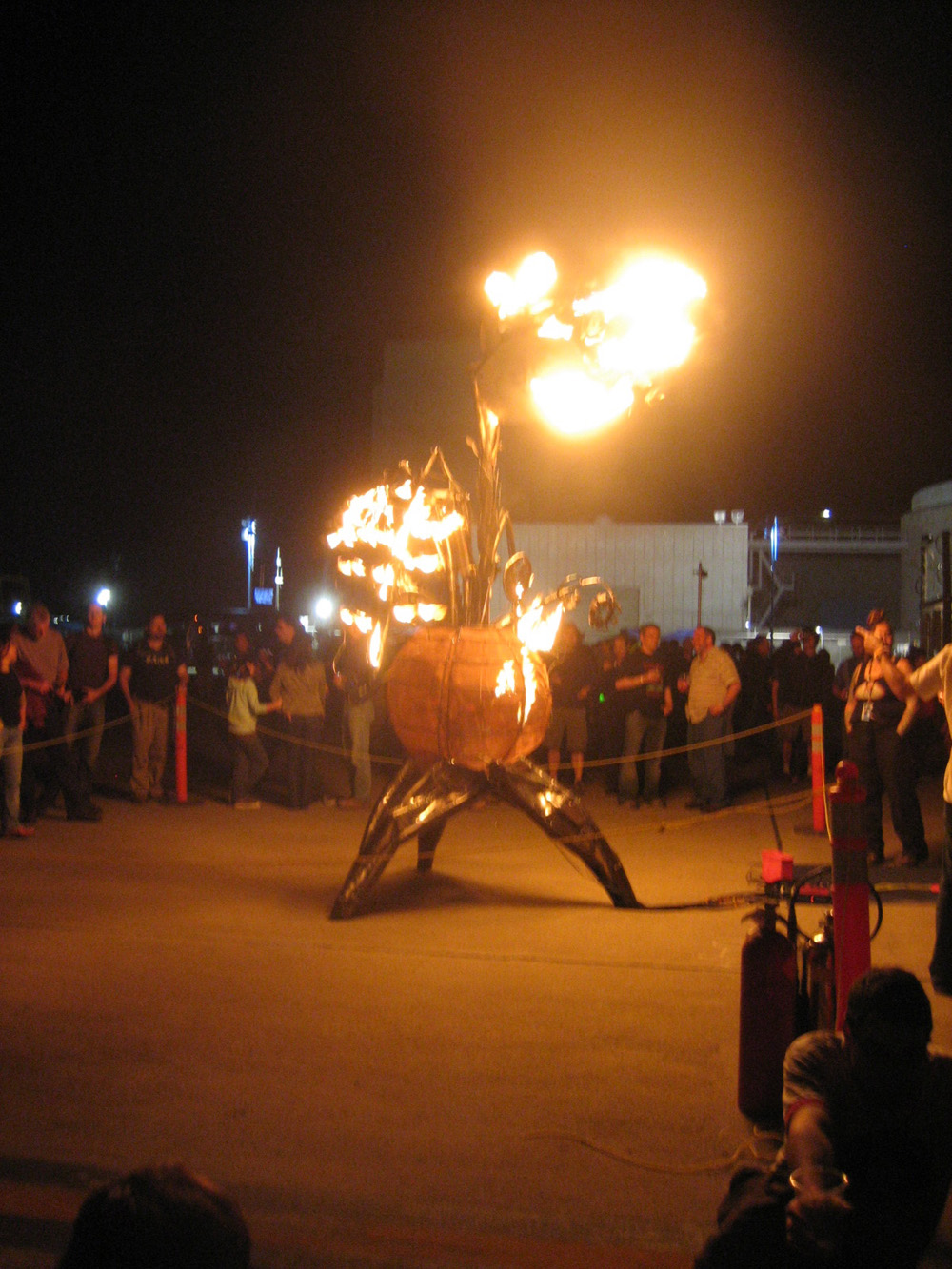
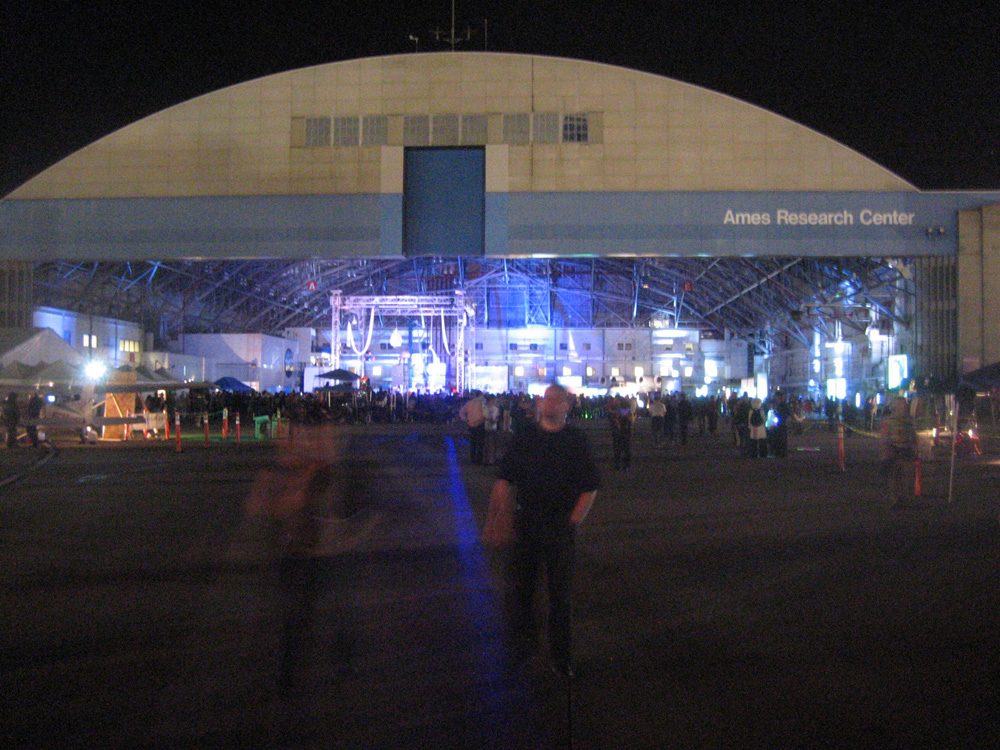
Only at Ames: space & culture in perfect symbiosis (more where this came from @ my Flickr)
Richard Dawkins @ UC Berkeley
Posted on Friday, March 21, 2008
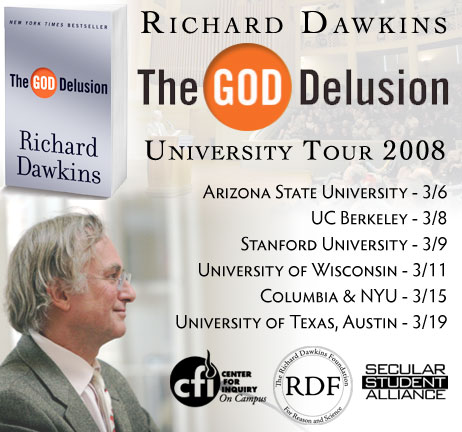
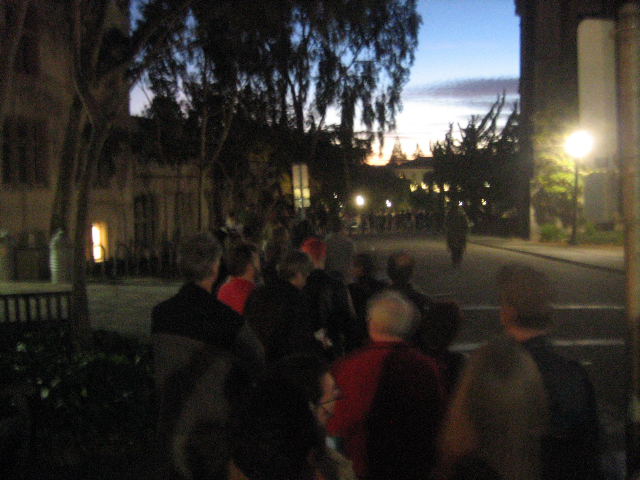
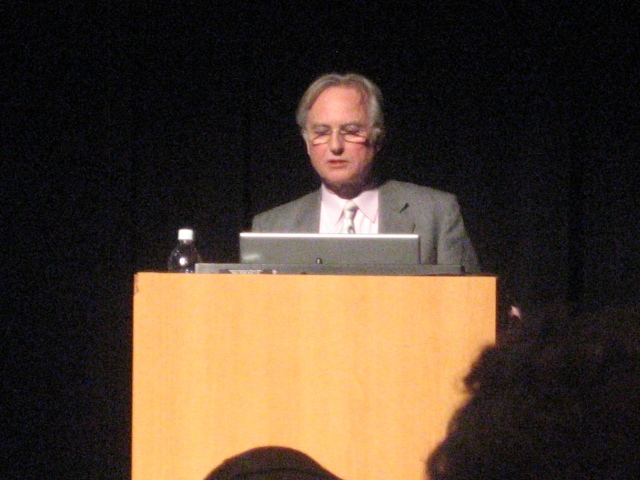
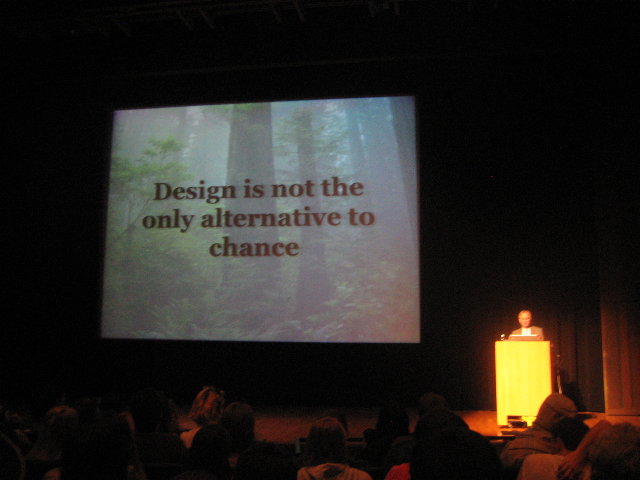
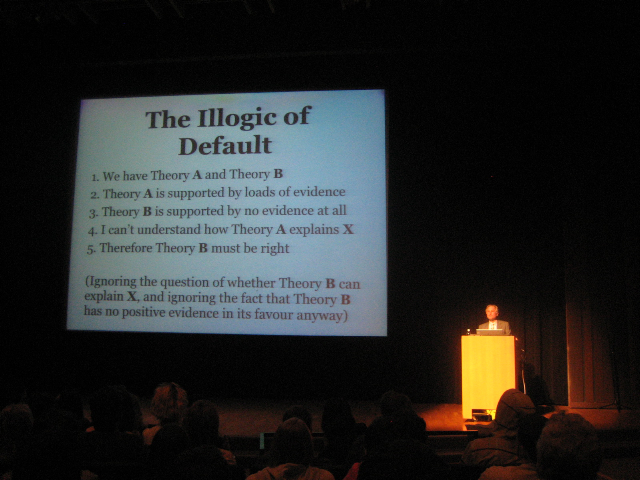
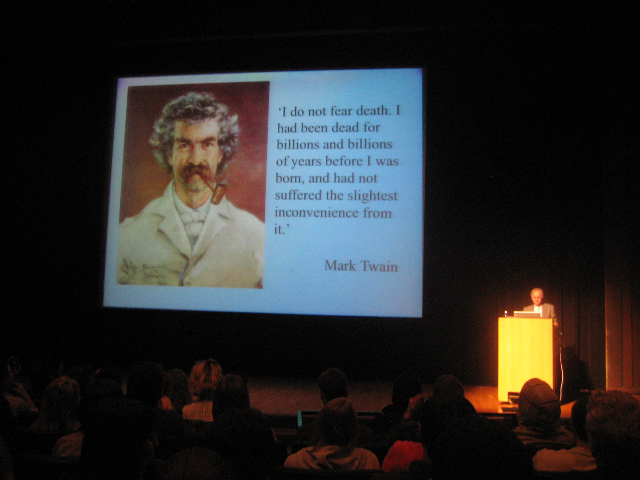
There goes another one from my wishlist. 2 weeks ago I went to see a lecture by Richard Dawkins in the Wheeler Auditorium at UC Berkeley. Although the God Delusion is not my cup of tea (I don't have a religion to loose), my admiration of him comes mainly from his evolutionary work like the Selfish Gene and others. Arriving that saturday evening, things were looking a bit grim at first, I was expecting not a big turn out, but when I arrived there was a large crowd and a long row. Good to see he has a big following in the US. With a bit of luck I managed to get into the auditorium on a standby ticket.
Next on my list: the computer history museum, lunch at Apple and Google HQ, and a couple of others. Keep you posted. Oh, and another one, the Columbia supercomputer at NASA Ames (image below), been there as well wednesday, thanks Creon.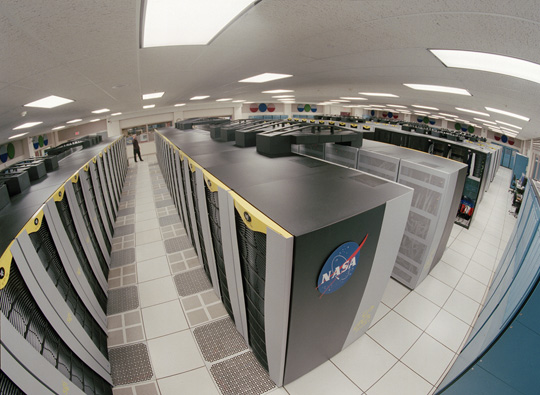
A.C. Clarke died today
Posted on Wednesday, March 19, 2008
...(bbc news)
update: Google's Chief Evangelist Vint Cerf also says goodbye to Clarke in this post. It includes a nice video of Clarke recorded end of last year.
A story of planets and links
Posted on Wednesday, March 12, 2008
Space To The Rescue
Posted on Monday, March 3, 2008
- Need a good
excusereason to go to New York? Read this NYT review of the MOMA exhibition 'Design and the Elastic Mind'. Makes me wanna go! More at MOMA (via Google LatLon) - TED was on. Missed it. Next year. Here are a lot of good videos from it. Lots of buzz about Microsoft's new move vs Google Earth/Sky: World Wide Telescope. The TED video is here. Indepth reviews at OgleEarth and GoogleEarthBlog. Looking forward to a test drive, which will have to wait untill they release it this spring.
- Just learned that Google is running a www.google.com/space subdomain these days with the following overall statement:
There's nothing we love more than ambitious research with world-changing potential, and space exploration and research have long produced much of the scientific community's most ambitious, even audacious work.
We honor the work that's been done in the past, and want to foster and support that work today and in the future. By supporting space-related research and exploration, we hope to inspire a new generation of innovators to enter the fields of science, technology, engineering and mathematics. We believe that the same imagination and passion that fuels space research and drives those who meet the challenge of space exploration will also help advance research and development in fields closer to our own.
That's certainly a statement I can get my head around, especially coming from an IT/media company ;-)
Btw, I learned about the subdomain here at Ames where Chris Kemp and Matthew Hancher (NASA's Planetary Content team Project lead) showed us the Google Street View equivalent on the Moon: Apollo panoramas...uhm...lunalocated (?). Quite impressive. Story telling is a big part of the overall picture, as both reviews (above) of the upcoming Google Sky competitor are right in mentioning. The possibility to re-live Apollo adventures in their appropriate context is excellent. Its still a bit text-heavy for now, but I am sure that that's gonna change as the platforms evolve. Btw2, for some reason this most recent release of Google Moon (think it was this post d.d. 13th September 2007 where it was announced) didn't make it up the list for me, which makes me wonder: is it time for a dedicated Google Space Blog?
Time to get on the bus
Posted on Wednesday, February 27, 2008
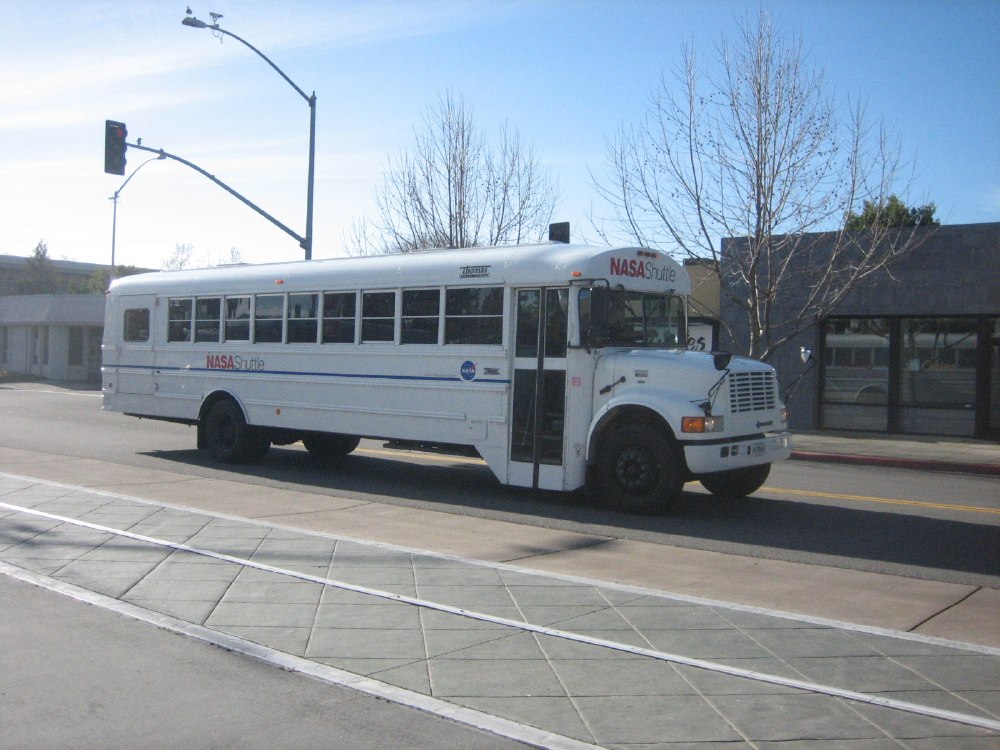
Ok, so its time to give a brief update on my (physical) whereabouts. Since last thursday I moved from Amsterdam to Mountain View, Silicon Valley to work with Chris Kemp and his collegues over at NASA Ames starting next monday March 3rd. Weehoo! Finally, a long held dream is coming true, taking part in the upcoming merger of outer space and cyberspace, right at the heart of where all things space are happening. Couldn't be better!
As for this blog, looks like I will be using it from now on to give you a personal insight in my personal and professional experiences here in the Valley. Sofar, these include a great arrival and first few days enjoying the Bay Area rainy season (yes, it can rain here...), a visit to the Vertical Motion Simulator on NASA Ames premises last friday (for photos have a look at this flickr album), my first NASA vrimibo with Ames director Pete Worden, Chris Kemp and several of my upcoming collegues (vrimibo is short for 'vrijdag middag borrel', Dutch for the traditional friday afternoon drink), a first counter-clockwise drive around the Bay Area, and writing off the first item on my wishlist of things-to-do-when-I-get-to-the-Bay-Area: attending a Long Now seminar in San Francisco (on which more in a follow-up post).
SpaceCollective.org
Posted on Monday, February 11, 2008

Techno utopianism lives on. Its been a while since we heard from Kurzweil, but I recently came across this website called spacecollective.org, set up by former country man Rene Daalder. From a first peek, it seems to be along the lines of what this blog is all about, that is, evolution of technology and the role of space in this evolution. Spacecollective.org seems to have a healthy critical stance, definitely worth a visit. I like the fact it originates from someone in the film industry, one of the main story telling industries out there and a long time passion of mine. Like the Peppers used to sing:
Space may be the final frontier
But it's made in a Hollywood basement.
Columbus is in orbit
Posted on Thursday, February 7, 2008
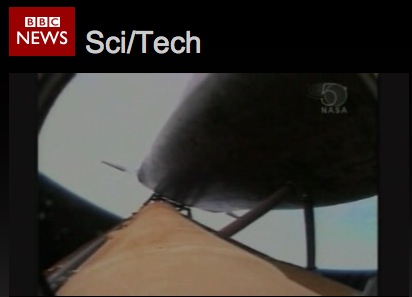
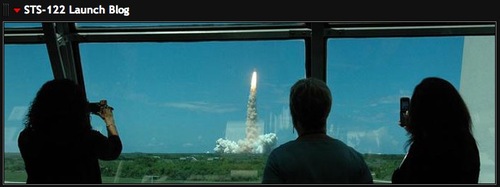
Congratulations to everybody involved!
More at:
NASA STS-122 blog
BBC news (10 min video)
NASA's Day of Remembrance
Posted on Saturday, February 2, 2008

January 31st turns out to be NASA's Day of Remembrance I just found on this NASA page running the following copy:
NASA Deputy Administrator Shana Dale, left, and other NASA senior management participate in a wreath laying ceremony at Arlington National Cemetery as part of NASA's Day of Remembrance, Thursday, Jan. 31, 2008. The wreaths were laid in the memory of those men and women who lost their lives in the quest of space exploration, including the astronaut crews of Columbia, Challenger and Apollo 1.I am struck by the beautiful serene image accompanying the article. Hardly feels like the space imagery we are used to get from a space agency. (((Having watched a lot of Sopranos years ago, I feel my mind is already starting to spin all kinds of stories...)))
Space Metaphors 2.0
Posted on Thursday, January 10, 2008
Following an earlier mention of space metaphors, yesterday I found this video of Jonathan Harris at TED earlier in 2007. Very nice work! Half way through the video you'll understand the reason for posting it under the title 'space metaphors' (via VanElsas)
The Bible According to Google Earth
Posted on Wednesday, December 19, 2007
Via OgleEarth comes the following:
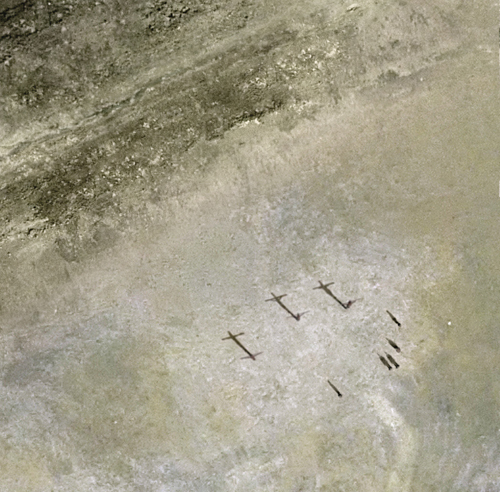
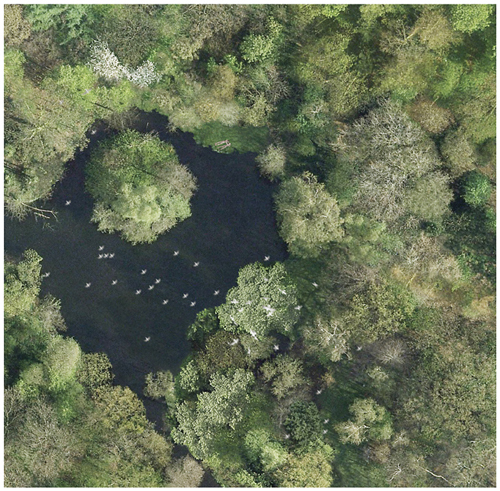
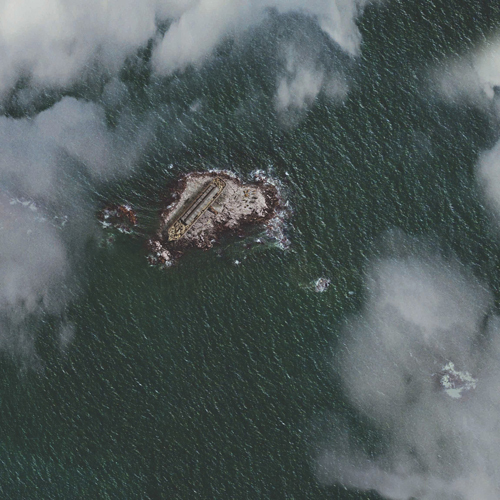
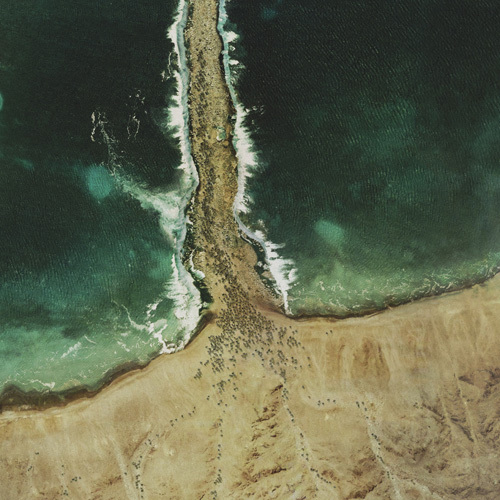
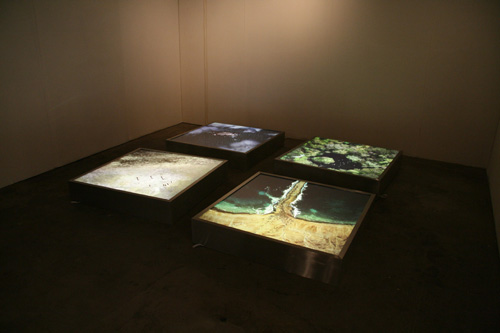
Sydney art collective The Glue Society produced a work that consists of retouched satellite imagery to depict biblical mythology. Says Glue Society’s James Dive: “We like to disorientate audiences a little with all our work. And with this piece we felt technology now allows events which may or may not have happened to be visualized and made to appear dramatically real. As a method of representation satellite photography is so trusted, it has been interesting to mess with that trust.”
More at Creative Review. Reminds me of an exhibition on Solar Science Debra Solomon, me and Ricky Seabra developed a couple of years ago for ESA as ArtRaceInSpace Ltd. Nice to see Google Earth is entering the domain of contemporary art. Its gonna be a smiley day today. Anybody up for geo-referencing these scenes in Google Earth? ;-)
The Crucifixion
Adam and Eve in the garden of Eden
Noah's ark
Moses parting the Red Sea
ISU2
Posted on Tuesday, November 27, 2007
Erik Laan points me to this post about the ISU2 working meeting held at Ames Research Center yesterday and today:
The ISU-2 Working Meeting is being hosted by NASA Ames Research Center to bring together key individuals to brainstorm the concept of the International Singularity University (ISU2) and to answer certain fundamental questions and plan for a "Founders Conference" expected in Spring 2008 and an inaugural Summer Program in 2009 in the Bay Area.International Singularity University (ISU2) which would educate attendees on the history, current status, trends and projected futures of these technologies. ISU2 will facilitate students to form networks, study the implications of exponentially advancing technologies (nano, bio, AI, etc), the cross-disciplinary interactions, and legal, policy and societal implications which will result. ISU2 would be modeled on the concepts and practices pioneered by the International Space University (ISU) during its past 20 years of operation (1987 - 2007).
Date: 26-27 Nov 2007
Location: NASA Ames Research Center, Moffett Field, CA, US
Web Site Address: http://www.arc.nasa.gov
Way to go Ames! I am an alumni of ISU1, that is, the International Space University, where I participated in the '06 summer session Team Project dealing the impact of Micro & Nano Technologies for space so I am thrilled to see the ISU formula being applied to a topic that is close to my heart. In fact, I think I'd gladly follow the ISU-2 summer session cause it'll have a lot of interesting ground to cover. And Silicon Valley is the right place to be when it comes to the Singularity. ISU1 summer session 2009 is already scheduled to be hosted at Ames so '09 promises to become a truly remarkable summer over in Mountain View.
The Future of the Past
Posted on Tuesday, November 27, 2007
Nice space art for a change (thanks Jurryt!). Readers of this blog will have noticed I specifically use the term 'space related arts' for the activities I am involved with, like these, in order to make a distiction with the general understanding of what space art is, like this.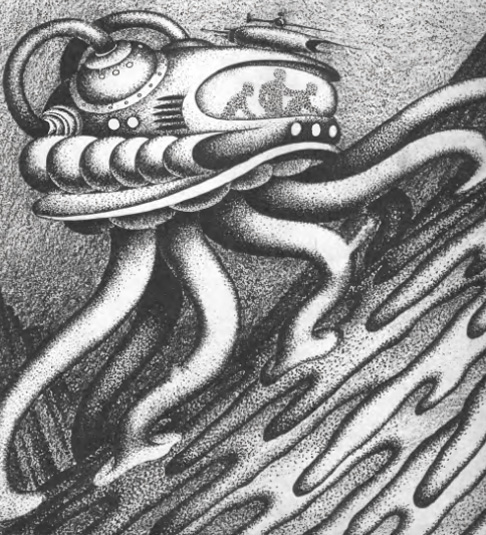
Some thoughts following the Space Explo Conference
Posted on Tuesday, November 13, 2007
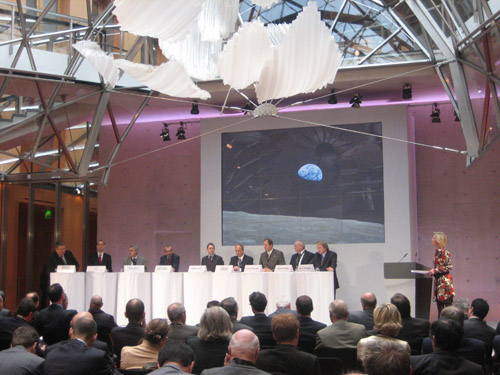
Update 15 November: I was told at ESTEC today that videos of the conference will indeed be posted lateron once they are finished with the editing.
I went down to Berlin last week to attend an ESA/DLR conference on the future of Space Explo in Europe. A lot was said, presentations were abundant, and the various stakeholders (in particular politicians, space agencies and industry) gave their view on what Europe should be doing in the years to come on space explo. One of the main outcomes of the conference: the European Space Exploration Strategy has been reworded to the European Space Exploration Programme...he, these things can make a world of difference.
Interestingly enough, the M word, as in Moon, is still hard to pronounce by Mr. Sacotte of ESA as the agency has decided it should focus on the Mars. Seems this is a position they took when NASA was fully engaged with Mars exploration back in the early 00's. However, since then, Bush has redirected the NASA strategy towards bringing humans back to the Moon, and it seems hard for ESA to bring its strategy in line with this redirected global explo agenda. So while all countries pulling any weight in the space explo arena, China, India, the US of A, all have their focus on the Moon, Europe seems to be struggling with their lock-in in thinking about the Mars (the English pronounceation of native German speakers brings some funny mashups, as in talking about the Moon vs talking about the Mars). Germany however isn't fooled and recently announced its plans to develop a national lunar probe, something that was re-iterated at the conference by DLR Director of Space Programmes Mr. Dollinger.
There was a point where I got intruiged about the way they talked about the usual dichotomy between robotic (unmanned) and human exploration. Usually, this debate quickly ends in the trenches where the proponent on either side digs him/herself in with the usual arguments, leading nowhere. A first smart remark in this context I remember from US astronaut Jeffry Hoffman (of Hubble repair fame) who made the comment at ISU about the complementariness of humans and robots (I don't remember his complete argument, but given that he went up to space to repair a robotic explorer kind of paints the picture of his understanding). At this conference, there was the same question on the table. On itself an interesting question and space is one of the few places where this comes up all the time due to the shear costs involved in sending humans up. This time, it felt as if the conference participants, all human to my knowledge, where there to make a strong case for human exploration...because all of us attending were human. It seemed there was a stance in the robotic/human debate about us against them. Its the first time I interpreteted the debate this way, but it makes for an interesting perspective on where things might be going. The drive to explore doesn't change, its the means that are under scrutiny. Another argument in this context, one that I made together with an ISU collegue last year at a presentation was the following: the most efficient space suit is one without a human inside.
Another important topic which seemed to come up every 5 minutes during the conference was the need for communication of why Europe needs to take part in this global exploration agenda. Well, I guess its true then. The 'Artist as Space Explorer' space & the arts exhibition was nice in that respect but I had a strong deja vu of some 7 years ago when I was involved in a similar type of set up for ESA and the exhibition was mainly used as decoration around the bar with free champagne. Not that different here. Still, it appears there is a little seed taking root at ESA. Hope they'll let it grow...
If this were the web2.0 Summit held in San Francisco last month, the presentation videos would have been online by now. But this is a meeting of much less importance so no videos yet (space exploration...wasn't that something with Apollo?). I really hope they put some videos of the conference online, but given ESA's track record of keeping the walls high and dry, I have my doubts. I'll certainly address it when I get to ESTEC this week. Also in terms of putting the presentations online. If you're interested to put some faces to names, have a look at the flickr photoset I uploaded with the main talking heads. Below pictures were from a presentation by astrophysicist Hans-Joachim Blome about the Cultural Dimension of Human Spaceflight and Exploration. He managed to stay out of the usual paths and gave a glimpse at exploration from a scientific evolutionary point of view. I hope to receive his presentation later this week so I can post it here. 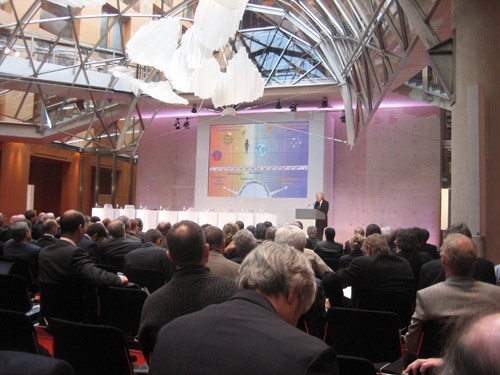
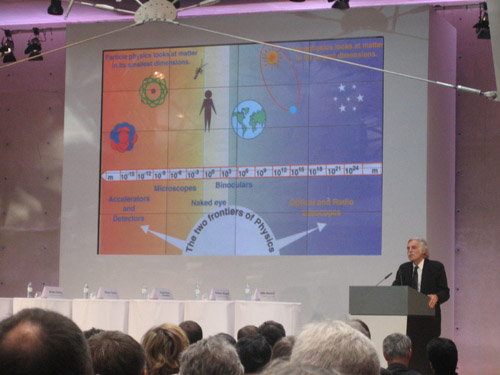
Vint Cerf on the Status of the Interplanetary Internet
Posted on Sunday, October 21, 2007
Found at SpaceDaily:
Internet preparing to go into outer space (nice title!)
After expanding across Earth, the Internet is now set to spread into outer space to reach parts no network has gone before, one of its co-creators predicted Wednesday.
Vinton Cerf said the proposed "interplanetary" Internet would allow people an ability "to access information and to control experiments taking place far away" from Earth.Expanding into the solar system would bring new rules and regulations too, he told an annual Seoul forum, saying he and other experts were working on a set of standards designed to guide space-era Internet communications.
"Finally, the Internet can take us where no network has gone before," said Cerf, who is Google's vice president and chief internet evangelist,
He said he and a team of engineers at the California-based Jet Propulsion Laboratory would complete a key part of the project -- establishing standards for space communications like those for Internet -- in three years.
Cerf told a separate news conference that new standards were needed because of the huge distances and time delays involved in communication across space.
He went on: "This effort is now bearing fruit and is on track to be space qualified and standardized in the 2010 time frame.
"Eventually we will accumulate an interplanetary backbone to assist robotic and manned missions with robust communication."
Google Earth and Google Sky Currently Don't Connect
Posted on Friday, August 31, 2007
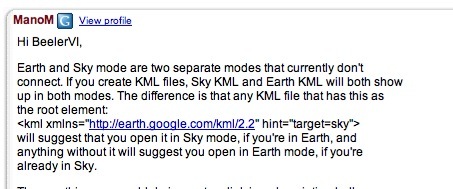
Currently..? Above screendump shows a response by Googler ManoM on the KML Developer pages which caught my eye while doing my weekly checkup on new discussions and topics. Still no time to do a proper scope of all the new stuff that came out with kml2.2 and Google Earth 4.2 but this provides an interesting lead when I'll find that time.

SciFoo
Posted on Thursday, August 9, 2007
Update from Duncan Hull (keep me posted Duncan!):
There is talk of EuroFoo, probably to be held in Cambridge. There will also be "bar camps" again, in Cambridge and soon in Manchester.
Man, I wish they'd bring SciFoo over to Europe, how cool is this ? To get a taste, have a look at this Flickr series ! Maybe a SpaceFoo? Probably a bit too exciting for ESA, but ISU perhaps?
NASA and Microsoft: Photosynth Exploration
Posted on Monday, August 6, 2007
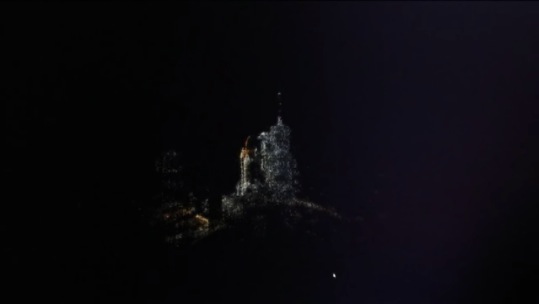
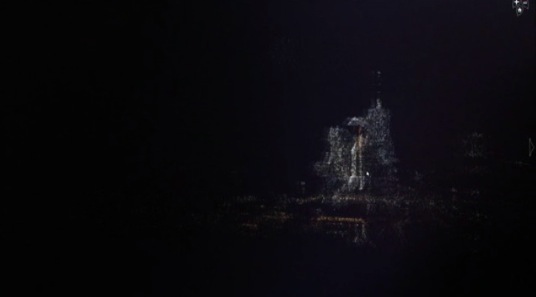
Just in (and spreading on the Internet like a wildfire, like here, here, here and even here): NASA & Microsoft collaborate by making available a Photosynth environment of the Shuttle launch pad at the Cape. Beautiful job!! (its only viewable on XP SP2 or Vista, but for Mac users there is at least a video to see what they are missing ;)
I remember posting a remark on the Photosynth website once suggesting they'd make a Photosynth environment of all Earth photos taken from space, but I wonder whether that is actually feasible given de lack of depth of these images and the changing weather patterns.
Btw, in case you're interested, here's a 58min GoogleVideo going into some of the details of a tool like Photosynth, except this one is not Photosynth but Photosketch (via).
RocketCam
Posted on Friday, August 3, 2007
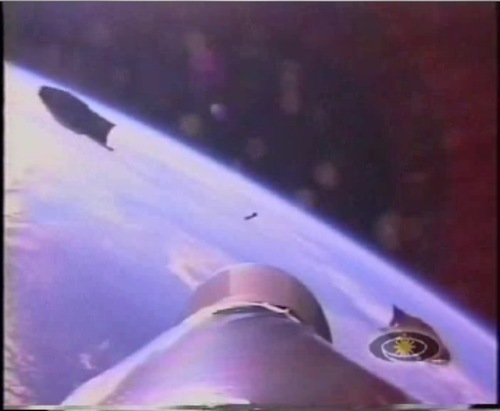
Another interesting 10-year anniversary: RocketCam (SpaceDaily post). Brilliant stuff (check this video!). Around the same time as Mars Pathfinder (earlier post), didn't know, but both firsts got me started on the space explo - cyberspace thing. Its the media stupid! Funny how nowadays everybody is zooming into the Earth from space, while these fragile rockets are trying to escape it...
Twitter As The Sixth Sense?
Posted on Wednesday, July 25, 2007
I have some vague but strong memories of reading a book as a kid where on another planet a civilisation evolved to a state where they could communicate via telepathy. In my memory, this way of communication felt surprisingly natural, so natural even that I hardly took notice of the fact that it was actually way off from the way we normally communicated on this planet in the 20th century...
Fast forward to 2007: mixing up web2.0 with space explo (or the other way around) is being discussed at the participatory explo workshop at Ames. Reading this 26June Wired article 'How Twitter Creates a Sixth Sense', I can totally dig it. Consider walking around your local supermarket and getting twittered by your favorite Moon explorer having a picnic on the Moon with a view of the Earth. Now that's what I call stretching the mental picture. Preferably the Astronaut2.0 will also send me some live images of the Earth, but that's another story...Btw, do machines twitter? (via MarketingFacts)
The occasional 'space related' art post
Posted on Tuesday, June 12, 2007
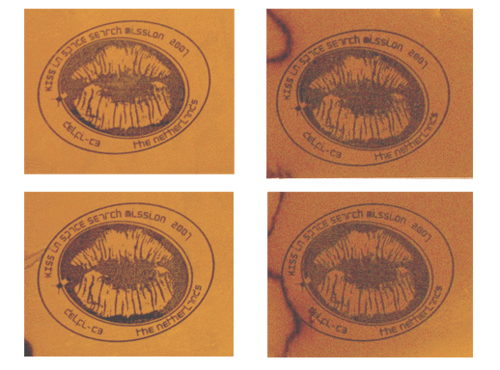
There hasn't been much ado about space art space related(!) art on this blog since the publishing of the ISS Cultural Utilisation policy recommendations back in early spring 2006. ESA is still in the works on the topic, and unofficially all kinds of stuff is happening, but out in the open, its quiet...very quiet...untill I was reminded by a collegue over at Delta-Utec about this space art project at the TU Delft. Not sure what to make of it, but nevertheless nice to see the meme is still catching on. And while we're at it, Jeremy Hight (of locative media art fame) just published a new article about immersive sight. Inspiring stuff!
Light posting ahead
Posted on Saturday, May 12, 2007
Haven't been very active on this blog lately, which is mainly due to my full focus on the development of my UGO project, making me less susceptible to reading my section of the blogosphere on all the news coming out on a daily basis. I haven't finished my first build yet, so this light posting will likely continue for the coming days/weeks untill I finalise a first UGO app. In the meantime, some interesting developments worth noting:
- Search Engine Land (definitely a good read)
- a joke
- Anil Dash post
- News.com
And of course there is the news of a new WorldWind JAVA release.
Updated blog feed
Posted on Tuesday, May 1, 2007
Mmm, turns out I already had a FeedBurner account with several subscribed readers to this blog (re: earlier post). Strange how things like feeds can get this complicated...;) Anyway, to keep things organised I decided to delete the new account and merge its feed with the already existing one. For those of you who subscribed to the new one in recent weeks, please visit my blog's webpage and (re)-subscribe one more time to the FeedBurner link on the right.
To check if you have the correct feed, the correct FeedBurner account should now have the following URL: http://feeds.feedburner.com/tobedetermined (for Safari on OSX this should read: feed://feeds.feedburner.com/tobedetermined)
Thanx again...
FBTO gives its roof a paint job
Posted on Wednesday, April 4, 2007
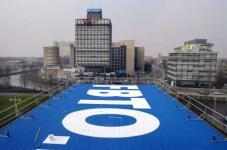
Dutch insurance company FBTO took no risk and painted its corporate logo on its roof to show up in the next update of Google Earth (Via MarketingFacts, in Dutch). Here is a video entitled 'Google Kijkt Mee (Google Watches Along)' where FBTO marketing manager Paul Koopman explains the why and how (in Dutch). Wouldn't it be handy if Google had a listing online of its planned database updates, just like they did earlier this year down under. I have a pretty large roof myself, which I wouldn't mind decorating if only I knew when to do it.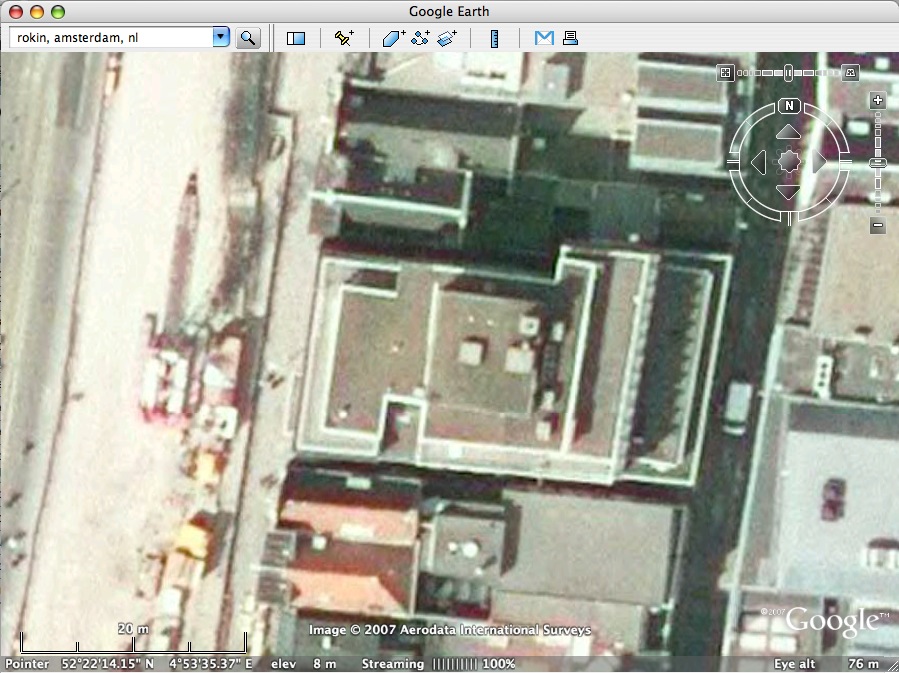
NASA budgets for development of MMO & Worldspaceparty
Posted on Tuesday, March 27, 2007
Another example of 'NASA gets it...the others follow': NASA moving into virtual world development:
To successfully advance the Vision for Space Exploration (VSE), NASA is continually refocusing and streamlining its organization, realigning ongoing programs, and tapping the innovative talents of our nation. To accomplish the VSE goals of returning to the moon and going beyond to Mars, NASA must find ways to enhanced science, technology, engineering and mathematics (STEM) education. This intramural call for proposal ideas seeks to develop a persistent, online, synthetic environment that will support NASA's STEM education goals and allow millions more American to share in the experience of NASA science and exploration virtually.Read more about this particular solicitation (16-page pdf) at 3pointD.com (the call seems to have been postponed). Seems to follows neatly along the lines of a NASA activity that has already been going on for some time: NASA CoLab:
NASA CoLab is a Collaborative Space Exploration Lab being developed at NASA. CoLab will provide a framework for exciting partnership projects between the nation’s space program and the thriving technology-entrepreneurial community. In addition to the benefits to collaborating with intellectual assets of the technology business sector, the general public will benefit through various projects supporting the NASA’s goals. CoLab will feature a physical space in downtown San Francisco, a collaborative online space where scientists and engineers from NASA will collaborate with the entrepreneurial technology community, and a space in “Second Life”, a virtual learning community with interactive content.This also reminds me: forget Easter, its WorldSpaceParty time. Some of the people I met while over in Cupertino are taking part in the organisation of this once in a lifetime party commemorating the 50th anniversary of the Sputnik launch, while at the same time celebrating the annual Yuri's night which is held all over the globe. Located in a hanger on NASA Ames premises, the event includes amongst others a concert by Plaid (enough reason already to go over there) and also hosts several space art exhibitions. In case you can't make it over to California, there is always the opportunity to visit the party through your second life ;)
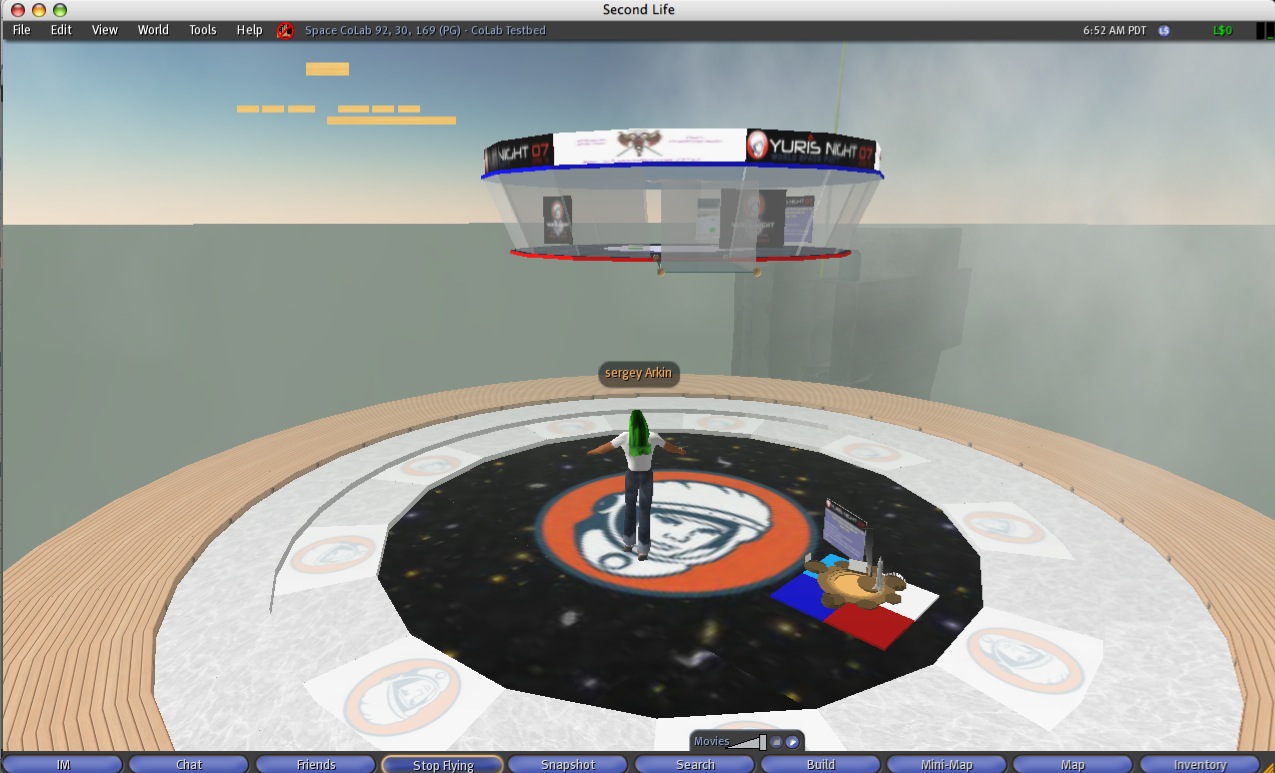
Click to enlarge
Here we go: locative media branding
Posted on Thursday, February 8, 2007
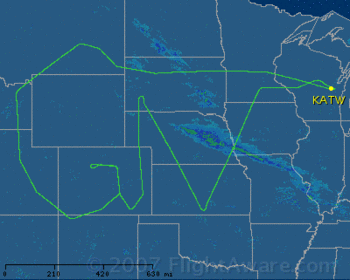
Advertisement in the virtual:
"The advent of Internet-based flight tracking technology enables an entirely new kind of skywriting. Gulfstream Aerospace sent up one of their $50M business jets today on an 8.5-hour test flight spanning 11 states for the sole purpose of leaving their mark on the Net in the form of a flight track that spells out 'GV' (the nickname of the Gulfstream V aircraft being flown) when viewed online."(via MIT's Advertising Lab blog)
On a similar note, at BoingBoing: Radar of corporate jets leaving the Superbowl
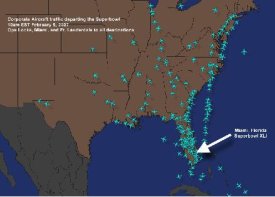
I hope we get to see some of this in space as well, before its too late...
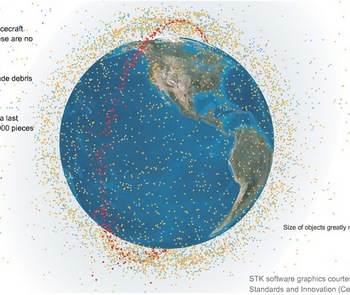
Big Brother ISS
Posted on Tuesday, December 12, 2006
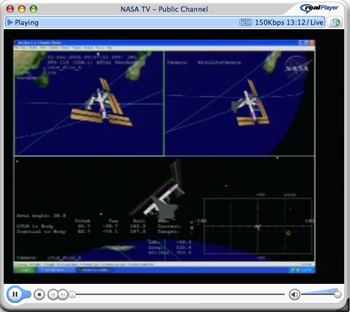
Just tuned into NASA TV (back after a couple of days offline illness), just in time for the live coverage of the hatch opening of the Space Shuttle Discovery to the International Space Station...'hatch opening...5:54 central time...6:54 Eastern' speaks the voice over...watching the two crews welcome eachother, and seeing the inside (and outside) of the space station from different camera positions, I start to wonder where I saw this before...
Its an expensive one, but its Big Brother allright...and quite an interesting one too...the only thing missing is the audio...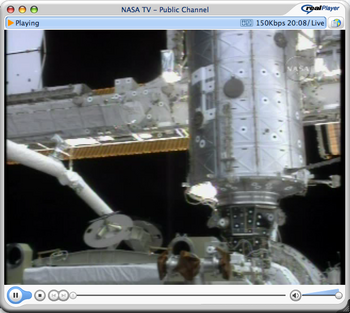
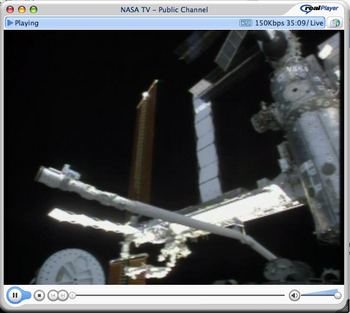
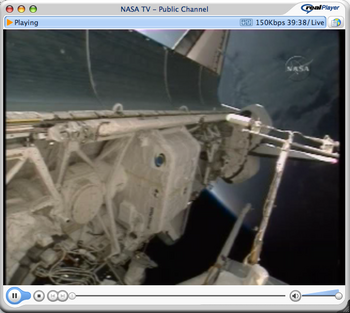
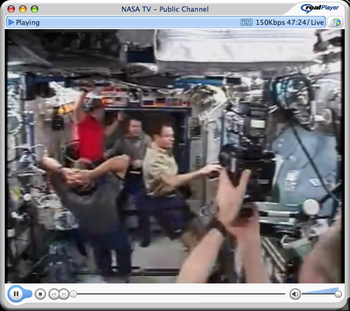
tobedetermined finds...
Posted on Tuesday, November 28, 2006
- Swedish space art
- web3.0 here we go...and here too.0
- ISU's Space Odyssey Institute to launch at the ISU Summer Session in Beijing
- ISU's 11th Annual International Symposium "Why the Moon?"
- Point to the sky and the SkyScout will tell you what you are looking at
- The SpaceNavigator, a new 3D mouse for virtual globes like Google Earth


ESA teams with Google Earth
Posted on Thursday, November 16, 2006
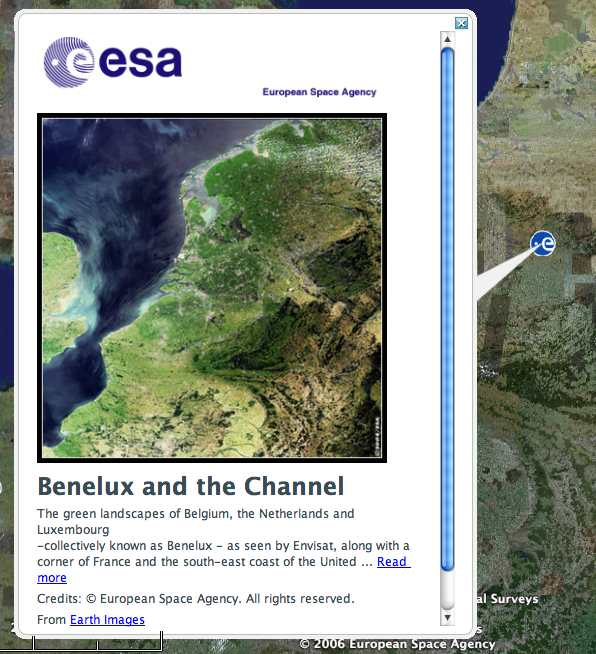
A couple of days after Frank Taylor from Google Earth Blog first noticed the addition of ESA imagery as a layer to Google Earth, ESA comes with a webstory. Nice to see that it gets around, like here, here and here. Btw, Frank makes a good point in stating that he is a bit dissapointed to see that the images are not directly overlayed on Google Earth but instead appear in a pop up window with a link to the image on the ESA web. Room for future developments i'd say ;)
An interesting read...
Posted on Wednesday, October 25, 2006
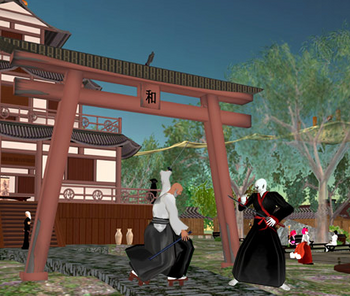
I haven't had much chance (or better: chose not to spent the time) myself lately to dive into the Virtual Worlds (VW) of World of Warcraft (WoW), Second Life, Multiverse, etc (except for Google Earth maybe, but that's different...sofar...probably that will chance in the future). Come to think of it, I did once install Second Life on my macintosh about a year ago, and flew around for a couple of nights...interesting experience I remember, standing up, and then smoothly go into flying mode...but beyond that it didn't really do it for me...yet...or better: chose not to dive into it further...yet...
I did recently finish Snowcrash, a book by Neal Stephenson, frequently quoted as being an inspiration for Google Earth (then Keyhole) developers, and an influential book for everybody thinking about (or dealing with) virtual worlds.
Anyway, getting to a point, I try to stay up to speed on the blogs I follow (see on the right here), and I notice there is more and more news and stories coming out on VWs, especially Second Life, but also on all other activities taking place in the virtual worlds arena. One example is this article, which I found via one of the key blogs on this topic, 3pointD.com.
Of course, the subject of this blog is the future merger of the virtual world of the computer and the 'virtual' world of outer space...and when I think of it, it makes perfect sense...but its far from being there, which is ok cause it leaves some room for definition...
Btw, here I found another interesting text on the subject, an interview of Space.com with William Gibson, dating back to 1999.
Something else to check: emerging technologies...
Cosmic Flash
Posted on Sunday, September 24, 2006
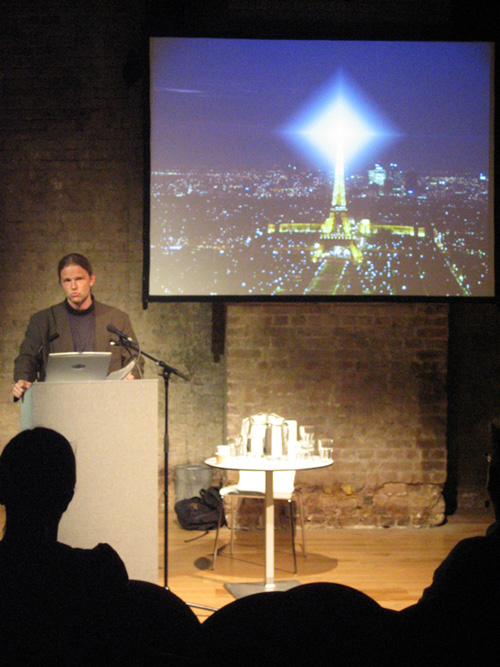
Two weeks ago I was in London for the Space Soon symposium on Art and Human Spaceflight. Tim Otto Roth, with whom I collaborated during the ESA study for a cultural policy for the ISS, presented here for the first time his proposed project for the ISS entitled 'Cosmic Flash'. Here is the original description of the Cosmic Flash project from the ESA study report:
This project concentrates on an invisible challenge for humans in space: the impact of highly energetic cosmic particles and radiation.
The idea is based around scientific research conducted onboard the ISS on the so-called ‘Light Flash’ (LF) phenomena. Originally predicted in 1952 and reported for the first time in 1969 by the Apollo 11 mission to the Moon, LFs consist of unexpected visual phenomena caused by the interaction of cosmic rays with the eyes of the astronaut. They occur in space with frequency and type, which can vary considerably from subject to subject.
The aim is to make this LF phenomena visible on Earth in near realtime by using the LAZIO LF experiment (human body as a particle detector) which was brought up and used onboard the ISS during the recent ESA’s Eneide mission (April 2005).
During the operation of the LF experiment, the crew member pushes a joystick button each time they have a light flash, which will be transmitted to the Earth and trigger a light flash in a prominent place. The Tour Eiffel in Paris is suggested as such a good location because it has played an important role in the discovery of cosmic rays (1910 by Theodor Wulf, see image on frontcover).
The 1-week installation will be transmitting the experiment two or three hours in the evening (LF rate ~3-6/min). Additionally the voice can be transmitted via loudspeaker describing the impression of the flash. On a large screen the realtime position of the ISS can be indicated.
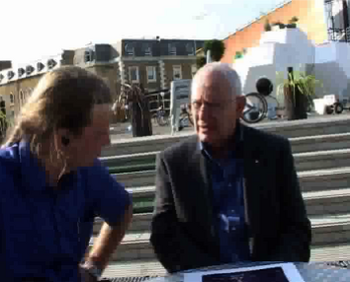
At Space Soon, he managed to get an interview with Alan Bean, one of the 9 remaining Apollo astronauts to walk on the Moon and ask him about his experiences with Cosmic Flashes.
The future is process, not a destination
Bruce Sterling
Everything is ultimately becoming information technology
Ray Kurzweil
Data is the Intel inside
Tim O'Reilly
There is only one machine and the web is its OS
Kevin Kelly
The medium is the message
Marshall McLuhan